The history
The can-can and the windmill
Where the can-can came from, who opened the windmill cabaret in 1889, what Toulouse-Lautrec painted there and what burned in 1915, from public sources.
Reserve your night ↗Quick answer
The can-can is believed to have grown out of the last figure of the quadrille, and by the 1890s it had professional stars. The Montmartre cabaret opened in October 1889, run by Joseph Oller and Charles Zidler, and Toulouse-Lautrec’s posters carried its name abroad. Fire destroyed the first building in 1915 and the rebuilt cabaret reopened in 1925, which is why today’s windmill is a rebuild. Wikipedia calls it the birthplace of the modern form of the can-can.
A dance from the quadrille
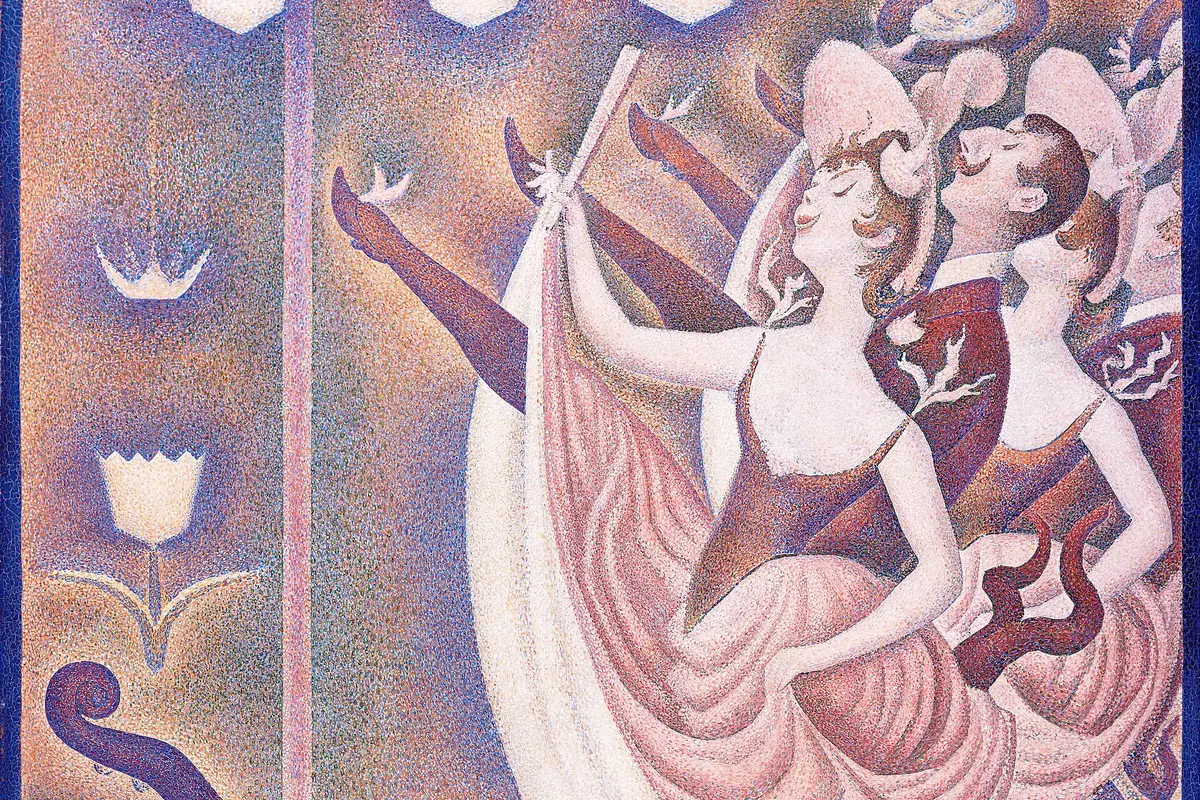
The can-can is a high-energy dance that became popular in Paris music halls in the 1840s. Wikipedia says it is believed to have evolved from the final figure of the quadrille, a social dance for four or more couples. Its main features are vigorous work with skirts and petticoats, high kicks, splits and cartwheels. It was considered scandalous, partly because the kicks were intentionally revealing, and occasional arrests are recorded, though the article finds no record of an outright ban.
The opening in 1889
The cabaret opened on 6 October 1889 at the foot of the Montmartre hill. Joseph Oller, a Catalan-born entrepreneur, was its creator, and Charles Zidler its manager. Wikipedia describes the aim as attracting wealthy Parisians to the fashionable district and says the garden held a large elephant. It names the Champagne evenings, the new dance and an auditorium built for quick changes of décor among the reasons for its early success.
The red windmill
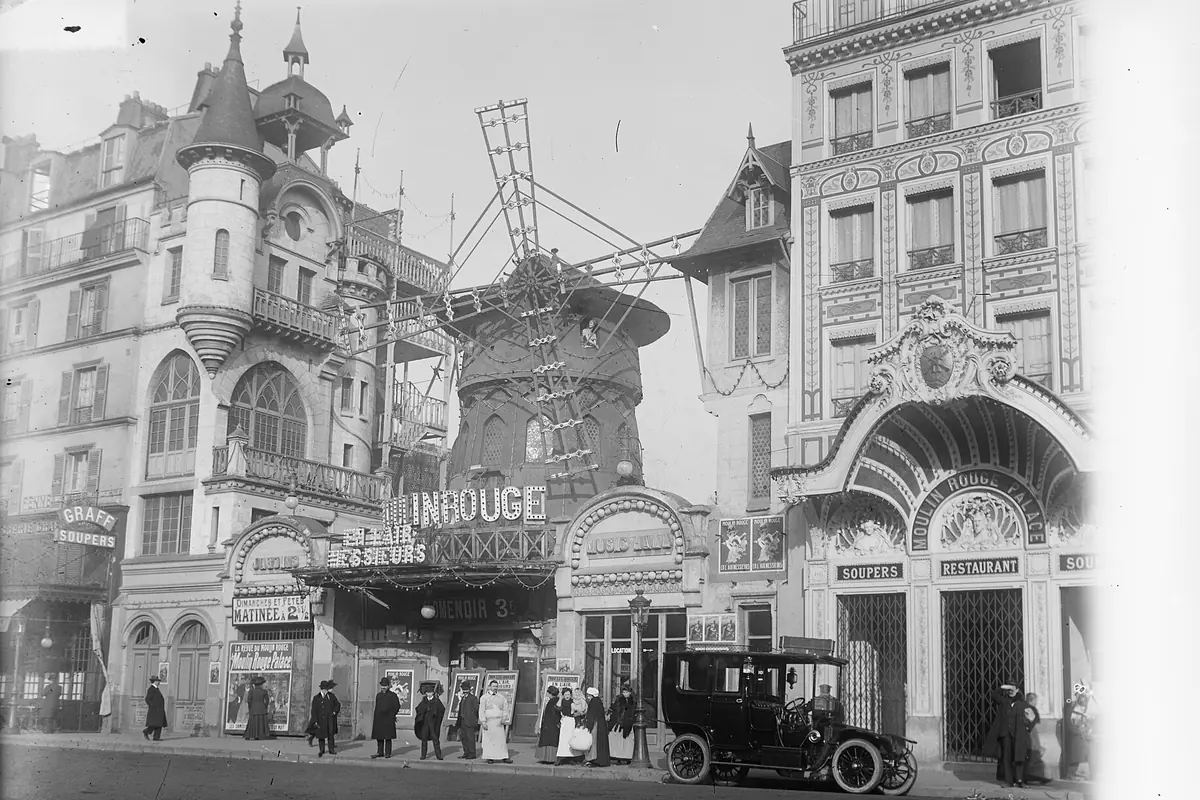
The French Wikipedia says Oller and Zidler imagined a big windmill painted red and lit at night, as a sign visible from the grand boulevards, and that Adolphe Willette drew it. It was unlike the other windmills of the hill, which had ground grain and plaster. This one existed to advertise the place. The sign worked: a red mill on the roof is still the cabaret’s landmark.
La Goulue and Valentin
La Goulue, The Glutton, was the stage name of Louise Weber. Wikipedia says she danced with Valentin le Désossé, Valentin the Boneless, an amateur dancer by night who was really a wine merchant, when the cabaret opened. Both were instant stars. She became the highest-paid entertainer of her day, and in the 1890s the can-can had professional stars like her and Jane Avril, where it had once been danced mostly by students in public dance halls.
Toulouse-Lautrec’s posters
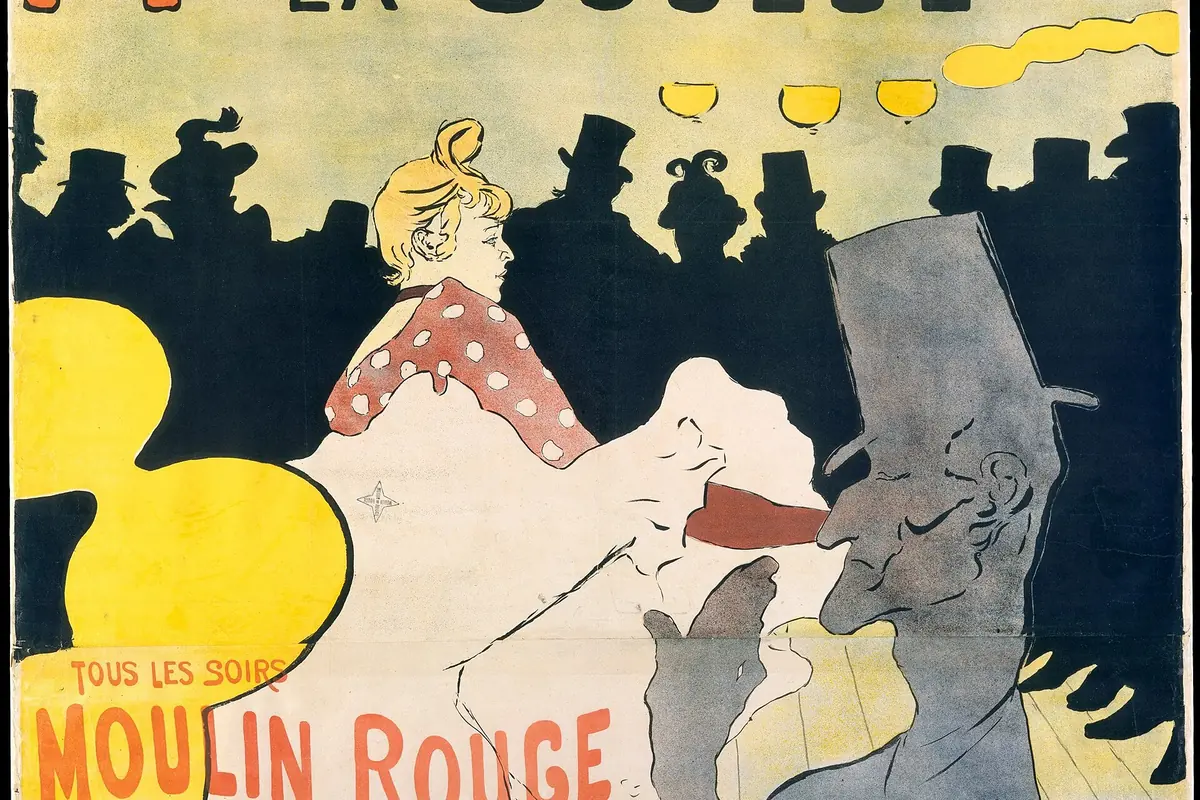
Henri de Toulouse-Lautrec was commissioned for posters when the cabaret opened, and the article on him says the cabaret reserved a seat for him and displayed his paintings. His first poster for the place, in 1891, showed La Goulue. The Moulin Rouge article credits his posters and paintings with spreading its fame quickly and internationally. For many people they remain the way the cabaret is remembered.
Fire in 1915, rebuilt in 1925
On 27 February 1915 the building was destroyed by fire during building works, and it stayed closed for nine years. It reopened in 1925. Wikipedia credits Gesmar, a young set designer, with the mill structure that defines the front today. The same article records that the sails collapsed onto the street in April 2024 with no injuries, and that the windmill was restored that July.
From the 1920s French cancan to today
The can-can article says professional dancers of the late nineteenth century developed the moves that the choreographer Pierre Sandrini later combined in the spectacular French Cancan, which he devised at the cabaret in the 1920s. It was a chorus-line routine, mixing the Parisian dance-hall style with British and American music-hall lines. Since 1951, the Moulin Rouge article says, the French cancan has been part of the cabaret’s revues. What any given night shows is for the cabaret to decide.
What it means for your night
Knowing the story changes how the evening reads. The posters, the red windmill and the high kicks are all older than the building you will sit in, and the hall and its décor date from the 1950s renovation. Wikipedia says the décor, largely carried out by the designer Henri Mahé, survives to this day. You are sitting in a rebuild that inherits a name, a sign and a dance, and the show ticket covers the rest of the evening.
Sources
- Read more: Moulin Rouge on the English Wikipedia
- Read more: Can-can on the English Wikipedia
- Read more: Joseph Oller on the English Wikipedia
- Read more: Charles Zidler on the English Wikipedia
- Read more: La Goulue on the English Wikipedia
- Read more: Henri de Toulouse-Lautrec on the English Wikipedia
- Read more: Moulin Rouge on the French Wikipedia