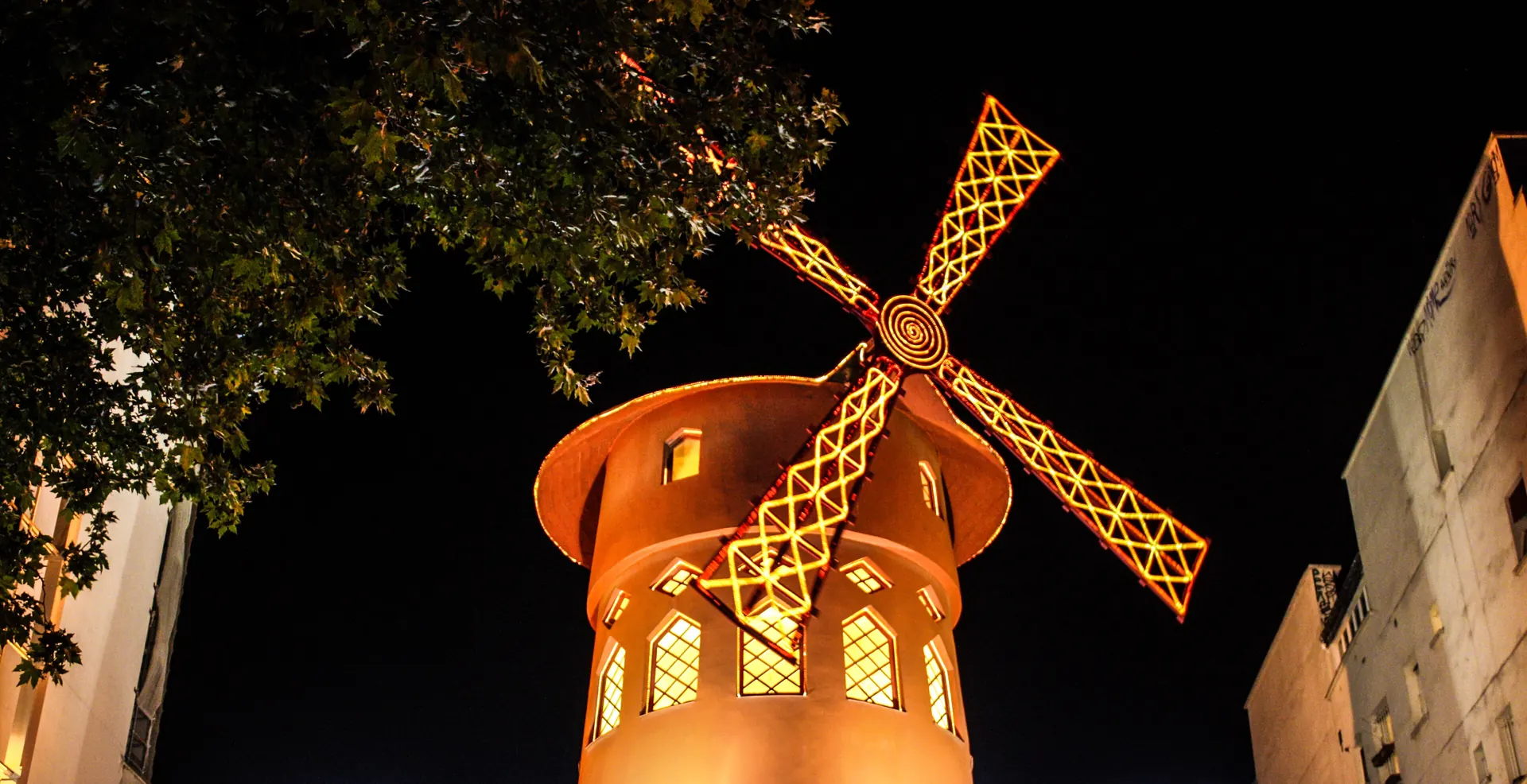
The short answer
Is the Moulin Rouge show worth the price, and should I add dinner?
For a first night in Paris that should feel like Paris, yes, as long as you want the spectacle and the setting more than a meal. The ticket covers entrance to the cabaret, a ticket to the current revue and half a bottle of Champagne per person, with service and tips included, over about two hours. Dinner is a separate listing: it runs longer, adds a menu of traditional French food and costs more. Book the show-and-Champagne ticket if the revue is the point, and the dinner version if you would be eating in a restaurant that evening anyway.
Five conditions to know before you pay
A show and Champagne, not dinner
The ticket lists entrance to the cabaret, a ticket to the revue and half a bottle of Champagne for each guest. It does not list a meal. The dinner version is a separate booking, weighed against this one further down the page.
Non-refundable, so settle the date
The booking page lists this ticket as non-refundable, and the cabaret’s own FAQ says its tickets cannot be taken back, refunded or exchanged. Be sure of your date and your group before you pay.
The dress code is enforced
Elegant attire is required: no shorts, sportswear or sports shoes, though a tie and jacket are not needed. The cabaret’s FAQ also lists flip-flops and, for men, open shoes, and asks guests to take hats and caps off in the hall.
The revue includes nudity
The cabaret’s FAQ says the revue includes nudity, and another answer describes topless passages. It accepts children from six years old with an adult, so decide who is in your group with that in mind.
The venue allocates your seat
There is no fixed seating plan to choose from. According to the FAQ, staff prepare the room each day and lead you to your table when you arrive, so you cannot pick or know your seat in advance.
The story behind the stage
Six chapters of a windmill cabaret
A night at a cabaret is better with a little of its story in your head. These six chapters follow the English Wikipedia’s account of the place and the dance. They are background on the building and the tradition, not a description of tonight’s revue.
-
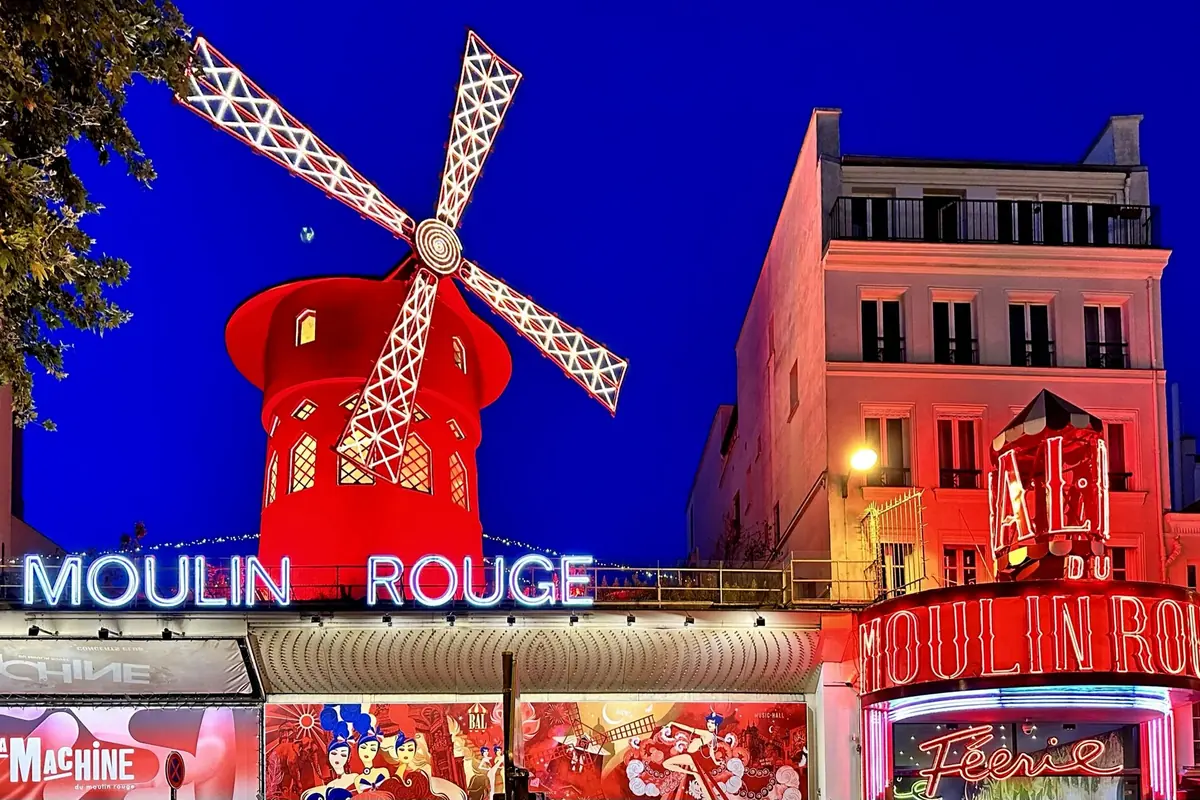
1889
Oller and Zidler open the doors
Wikipedia dates the opening to 6 October 1889 and credits two men: Joseph Oller, a Catalan-born entrepreneur also remembered for pari-mutuel betting, and his manager Charles Zidler. The aim was to draw wealthy Parisians to fashionable Montmartre. The article describes an outdoor garden café-concert at the foot of the hill, with a large elephant in the garden. The French Wikipedia adds that the pair wanted a big windmill, painted red and lit at night, as the sign of the place.
The windmill and front of the cabaret at dusk
-
The dance
A quadrille grows into the can-can
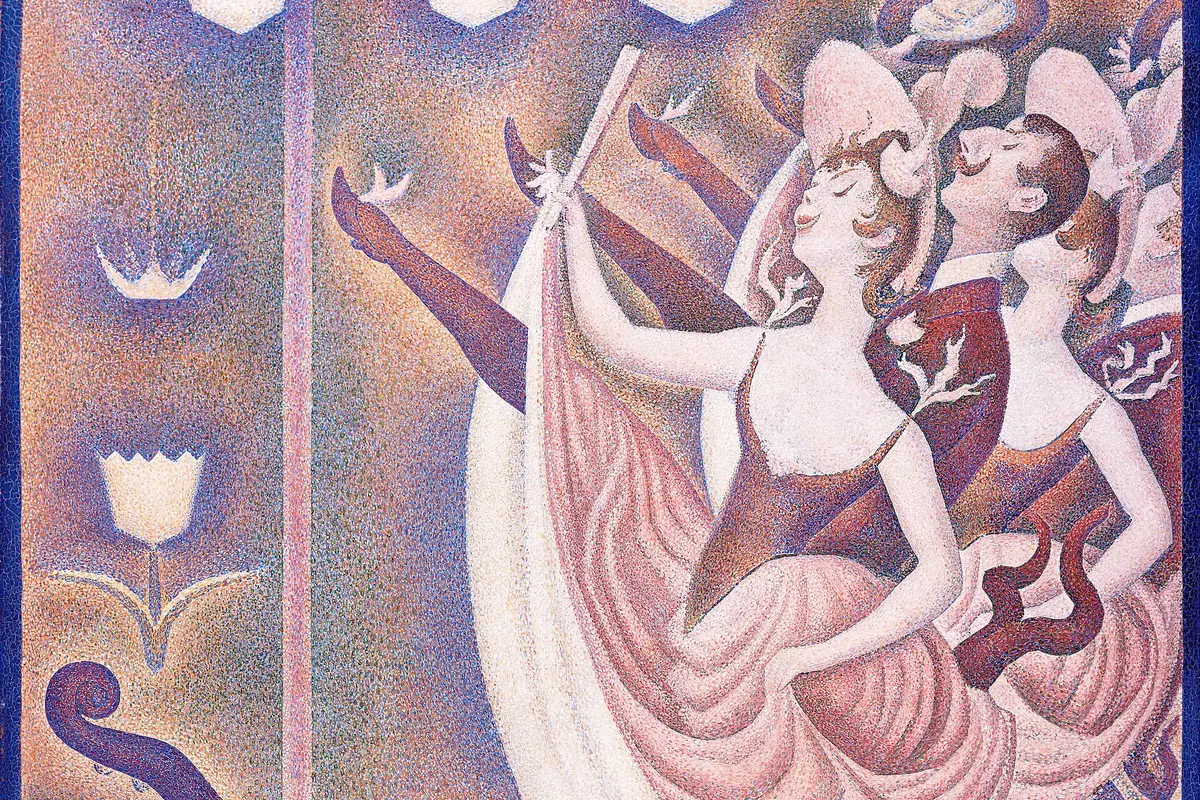
The can-can is believed to have grown out of the last figure of the quadrille, a social dance, and the high kicks were meant to reveal a little, which made it scandalous. By the 1890s a dancer could earn a living from it, and stars such as La Goulue and Jane Avril were highly paid at the cabaret. The best-known male dancer was Valentin le Désossé, Valentin the Boneless. Wikipedia lists the staples as the high kick, the cartwheel and the jump splits.
Seurat’s painting of the high-kicking dance, Le Chahut, 1889–90
-
1891
Toulouse-Lautrec paints the room
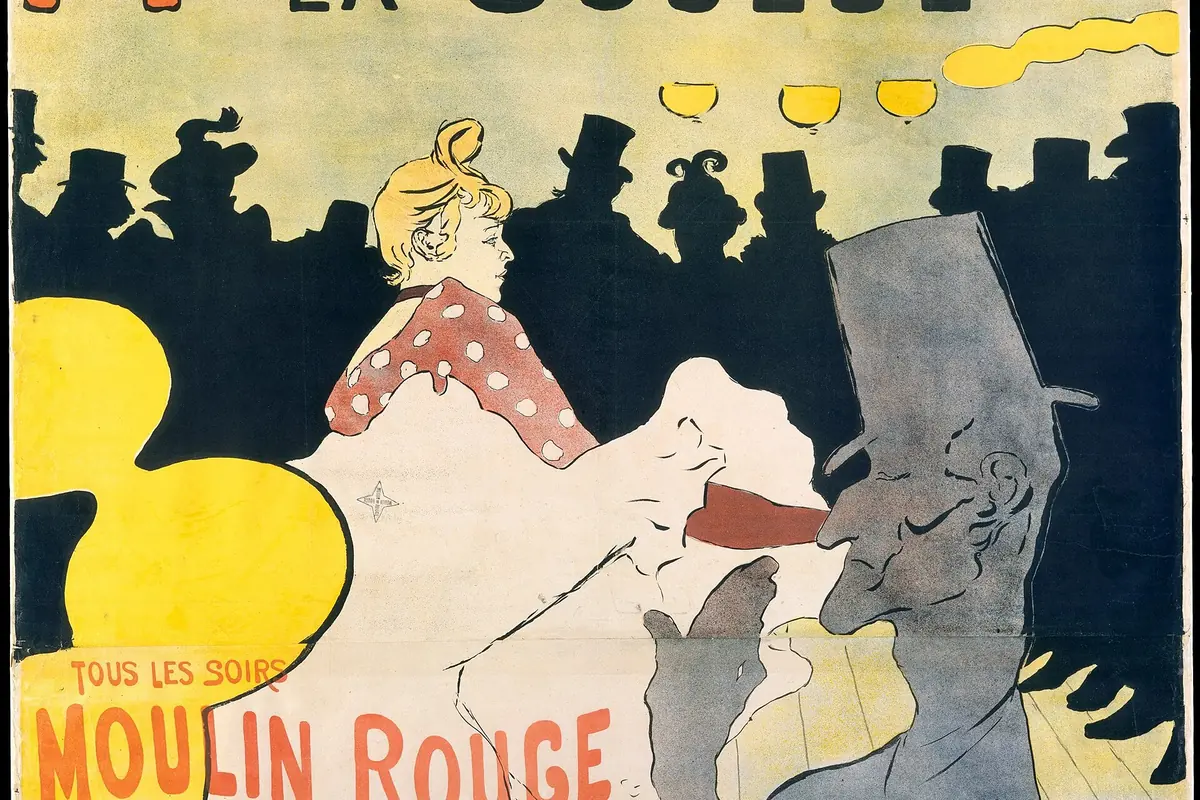
When the cabaret opened, the young painter Henri de Toulouse-Lautrec was commissioned to make posters, and the article on him says the cabaret reserved a seat for him and displayed his paintings. His first poster for the place came in 1891 and showed La Goulue. The Moulin Rouge article credits his posters and paintings, together with the Champagne evenings and the new dance, for the cabaret’s rapid, international fame.
A Toulouse-Lautrec poster of La Goulue from 1891
-
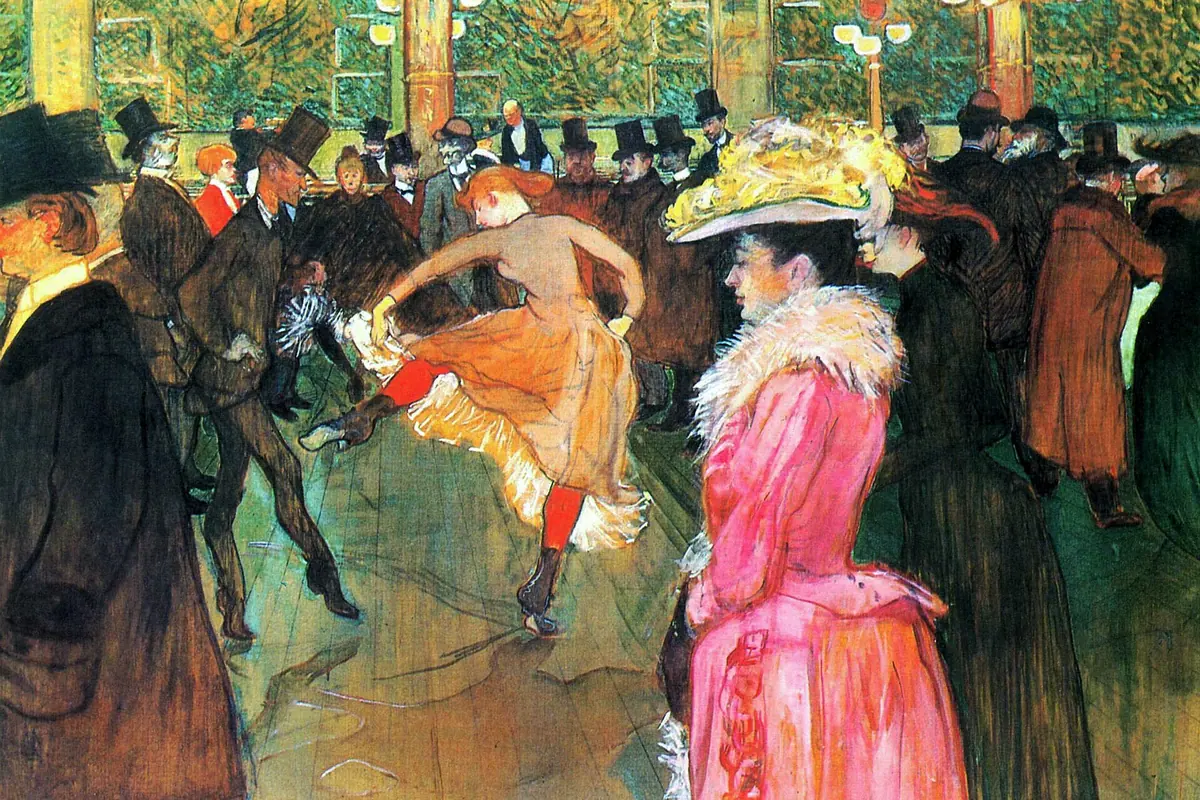
La Goulue
The Glutton who ruled the floor
La Goulue, The Glutton, was the stage name of Louise Weber, so called for the way she downed patrons’ drinks as she danced past. Wikipedia calls her the highest-paid entertainer of her day and one of Toulouse-Lautrec’s favourite subjects, and says she danced with Valentin le Désossé when the cabaret opened. It also tells how she greeted the future Edward VII, then Prince of Wales, with a cheeky remark about who would pay for the Champagne. She left in 1895 to strike out on her own.
A Toulouse-Lautrec painting of a dance at the cabaret
-
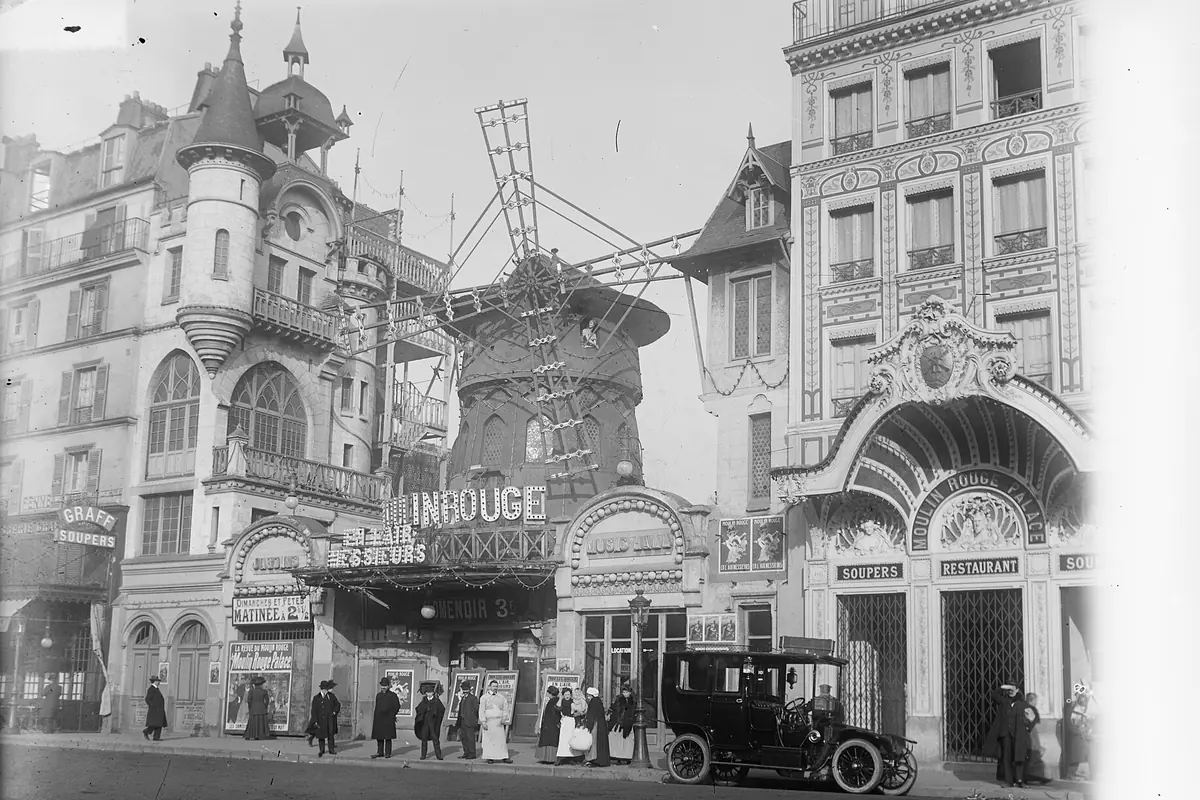
1915
Fire, nine years closed, then a rebuild
The original building was destroyed by fire on 27 February 1915, during building works, and stayed shut for nine years. The rebuilt cabaret reopened in 1925, and Wikipedia credits a young set designer called Gesmar with the mill structure that still defines the front. Today’s windmill is therefore a 1920s rebuild, not the 1889 original. Its sails came down onto the street in April 2024, injuring nobody, and the windmill was restored that July.
The cabaret’s front in an early press photograph from the Agence Rol collection
-
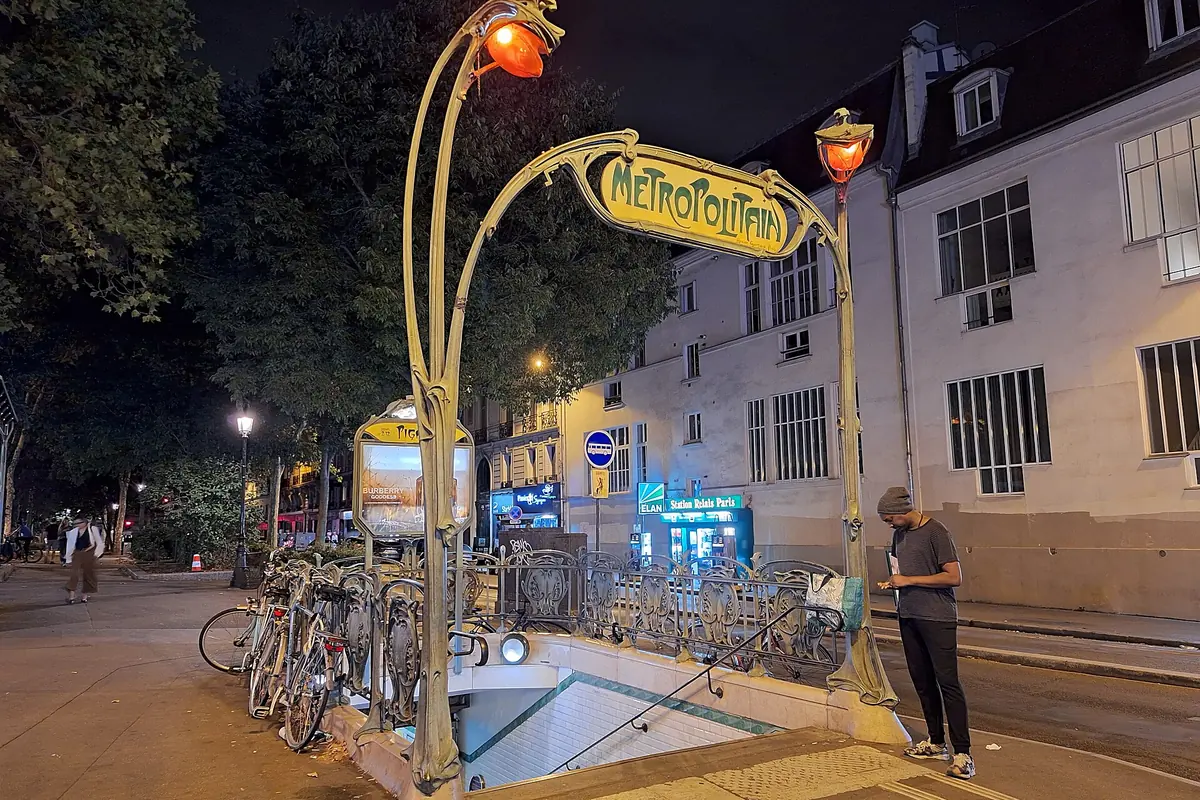
1951 to now
The French cancan returns, one revue after another
In 1951 Jo France bought the cabaret and had it renovated. Wikipedia says the décor, largely carried out by the designer Henri Mahé, survives to this day, and that evening dances, acts and the French cancan came back. Since 1963 the revues have been given titles beginning with F, and since 1999 the current one has been Féerie. The cancan is described as a staple of every one of them, but what a given night contains is the cabaret’s to change, so this guide gives no running order.
A Métro entrance at Pigalle at night
Sources: the English Wikipedia articles on the Moulin Rouge, the can-can, Joseph Oller, Charles Zidler, La Goulue and Henri de Toulouse-Lautrec, plus the French Wikipedia article for the windmill’s design. The photographs show the building today, paintings and posters of the period, and Paris streets. None shows the revue or its performers.
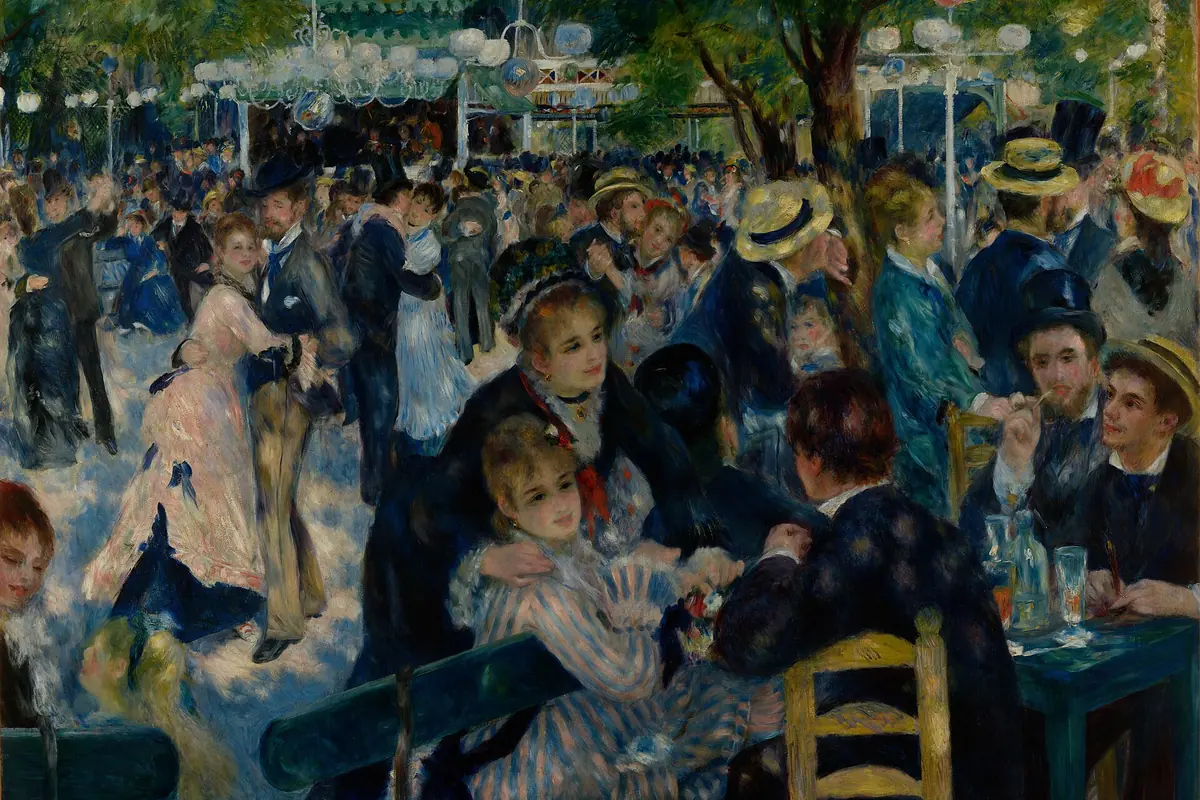
Then and now
The cabaret then and now
What the ticket covers
What your ticket does and does not cover
Each line below follows the booking page, with the cabaret’s own FAQ behind the house rules. Your confirmation adds the details for your date.
Open the booking calendar ↗Pick your currency in the booking calendar; the full total appears before you pay.
- The setting
- A cabaret on Boulevard de Clichy at Place Blanche, southwest of Montmartre in the Pigalle district, with a red windmill on its roof.
- Who runs it
- The cabaret’s own company stages the revue and a ticket seller lists it. Bookings go through GetYourGuide, and this guide is tied to none of the three.
- On the ticket
- Entrance to the cabaret, a ticket to the current revue and half a bottle of Champagne for each guest. Service and tips are included.
- Not on the ticket
- A meal, and transport. Dinner is a separate booking, and so is getting to Pigalle.
- Dress code
- Elegant attire is required, with no shorts, sportswear or sports shoes. A tie and jacket are not needed. The FAQ also asks men not to wear open shoes and guests to take off hats and caps.
- Seats
- The venue allocates seats. There is no fixed plan to choose from, and staff lead you to your table when you arrive.
- Photographs
- The FAQ says photographing, filming or recording the hall or the show is strictly forbidden.
- Who can come
- The FAQ accepts children from six with an adult, and says the revue includes nudity.
- Refunds
- The booking page lists the ticket as non-refundable, and the FAQ says the cabaret’s own tickets cannot be refunded or exchanged.
Champagne or dinner
Moulin Rouge with Champagne or with dinner: which ticket?

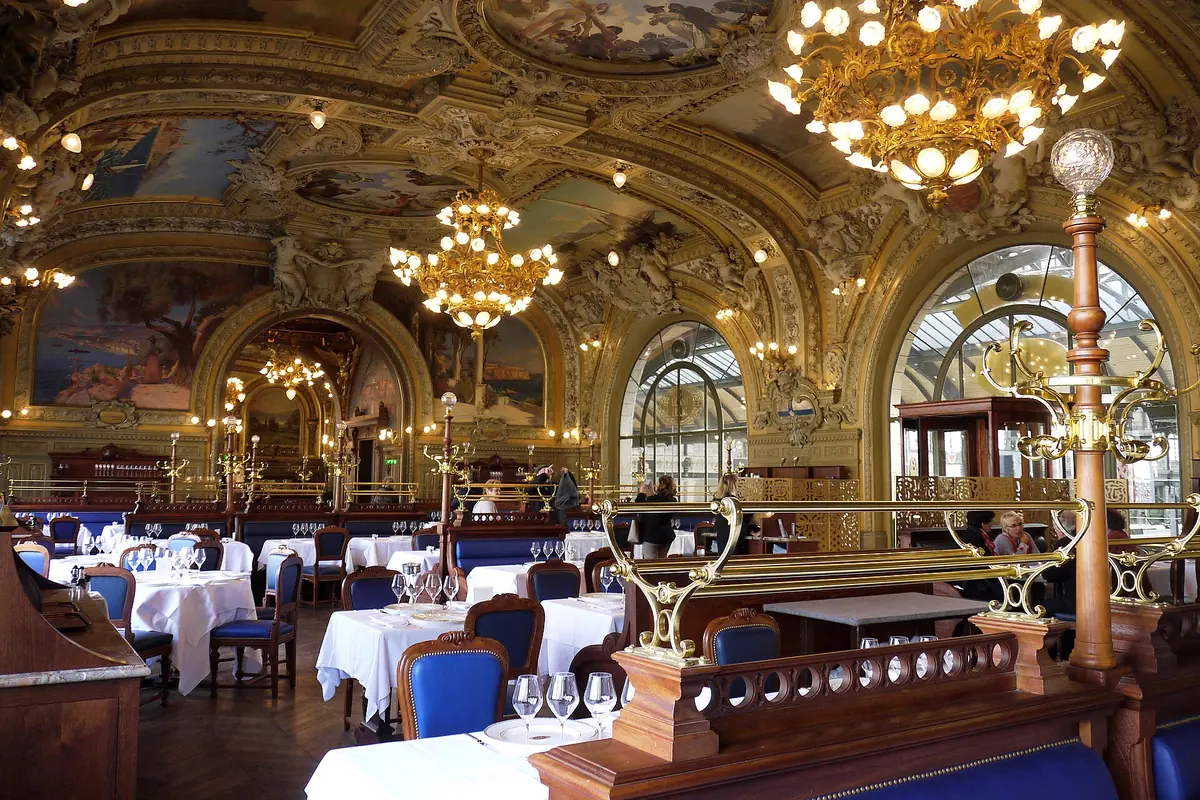
Book the cabaret, then fill out the evening
A cabaret night, dinner and show, a Seine dinner cruise and a rooftop view
The cabaret show is the booking this page is about. Around it are the dinner version it is weighed against, a dinner cruise on the Seine and the rooftop of the Arc de Triomphe, each with its own calendar.
- See dates ↗
The cabaret show with Champagne
A two-hour evening with entrance to the cabaret, a ticket to the current revue and half a bottle of Champagne per person. Service and tips are included, and the ticket is non-refundable.
- See dates ↗
Dinner and show at the cabaret
The same revue with a dinner from a menu of traditional French food, vegan options included, and half a bottle of Champagne each. It runs about four hours, so it stands in for your restaurant that night.
- See dates ↗
Seine panoramic dinner cruise
A dinner cruise of about 105 minutes on the Seine with views of the city’s landmarks, French cocotte cooking and a small-group format: a river evening in place of a stage one.
- See dates ↗
Arc de Triomphe rooftop
Entry to the rooftop of the Arc de Triomphe at the top of the Champs-Élysées, with views over Paris and the Tomb of the Unknown Soldier below. A daytime counterpart to a night in Pigalle.
Other things to book in Paris
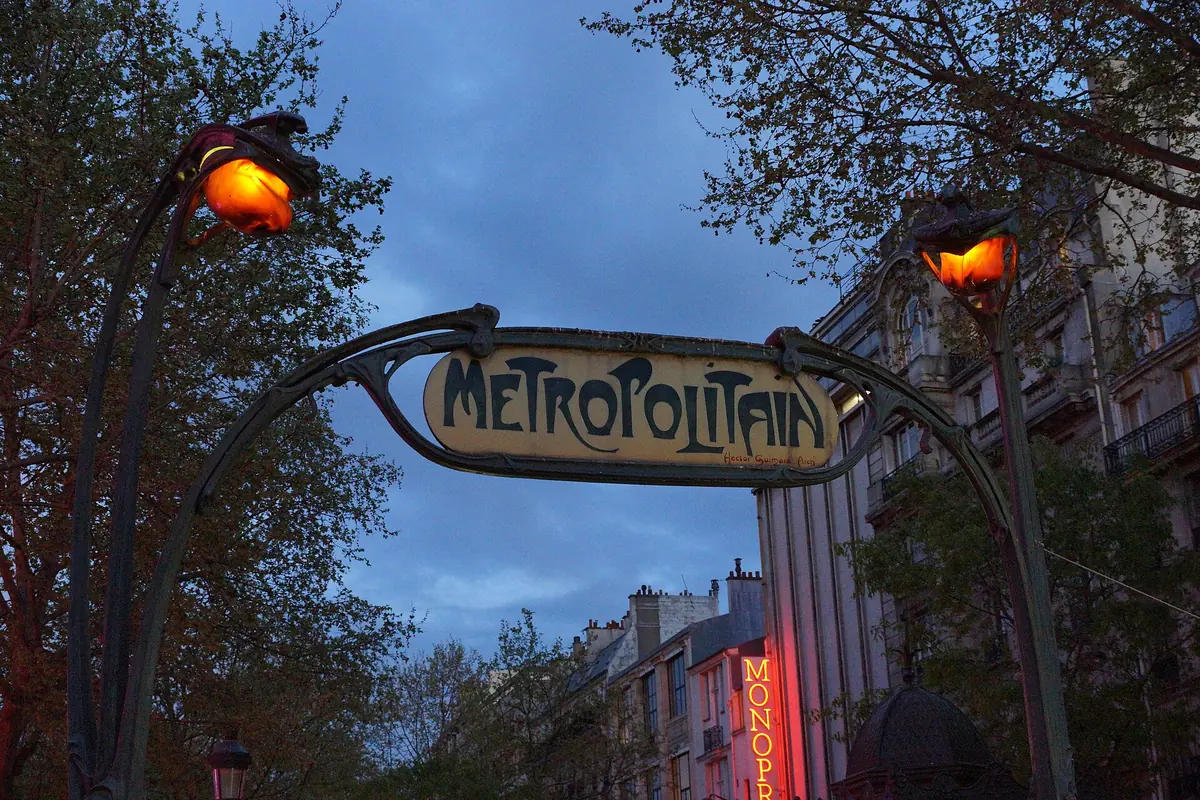
Getting there and planning the night
Getting to the cabaret and planning the night
By Métro
Wikipedia names Blanche as the closest Métro station to the cabaret. It sits under Boulevard de Clichy between Place de Clichy and Pigalle, and its entrance is a Guimard design that is partly protected as a historic monument.
Around the cabaret
The cabaret stands in Pigalle at the foot of the Montmartre hill. Wikipedia describes Pigalle as a red-light district and adds that today the area is largely known for shops selling rock-music instruments and for concert halls.
Dress for the door
Elegant attire is required, with no shorts, sportswear or sports shoes. A tie and jacket are not needed, and hats and caps come off in the hall.
Pick the date first
The ticket is marked likely to sell out and cannot be refunded. Open the calendar, settle on a date you are certain of and check the start time shown for it before you build plans around the evening.
Eat before or after
The ticket carries no meal. Eat first, eat after, or look at the dinner version if you want the evening in one booking.
Bags and photographs
The FAQ does not accept backpacks, suitcases or other large luggage, in the hall or the cloakroom, and forbids photographing or filming the show. Leave the bags at your hotel and the phone in your pocket.
Children and the nudity note
Children from six may attend with an adult, but the FAQ says the revue includes nudity. Parents should decide with that in mind.
Who should skip it
Anyone who wants a dinner on the ticket, cannot commit to a date, would be uncomfortable with nudity or wants to choose their seat should look at other bookings.
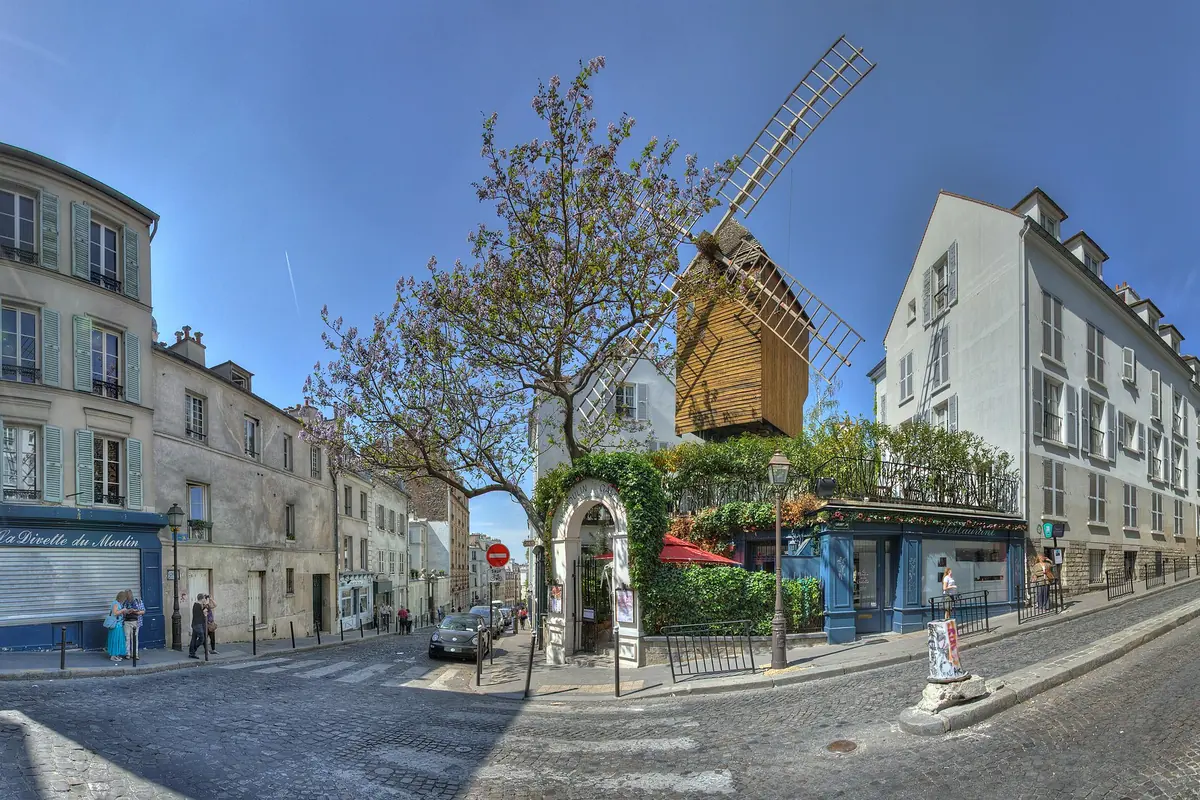
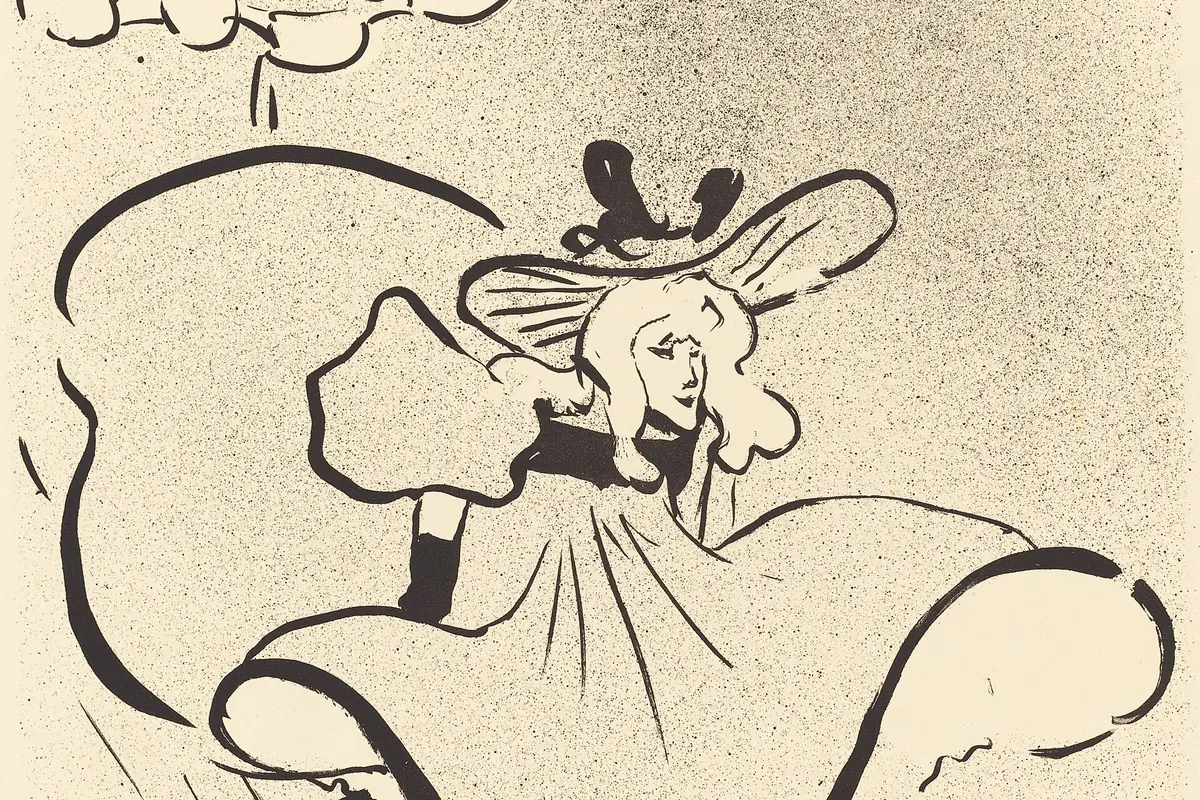
Montmartre, Pigalle and the posters that made the name
Montmartre, Pigalle and the posters that made the name
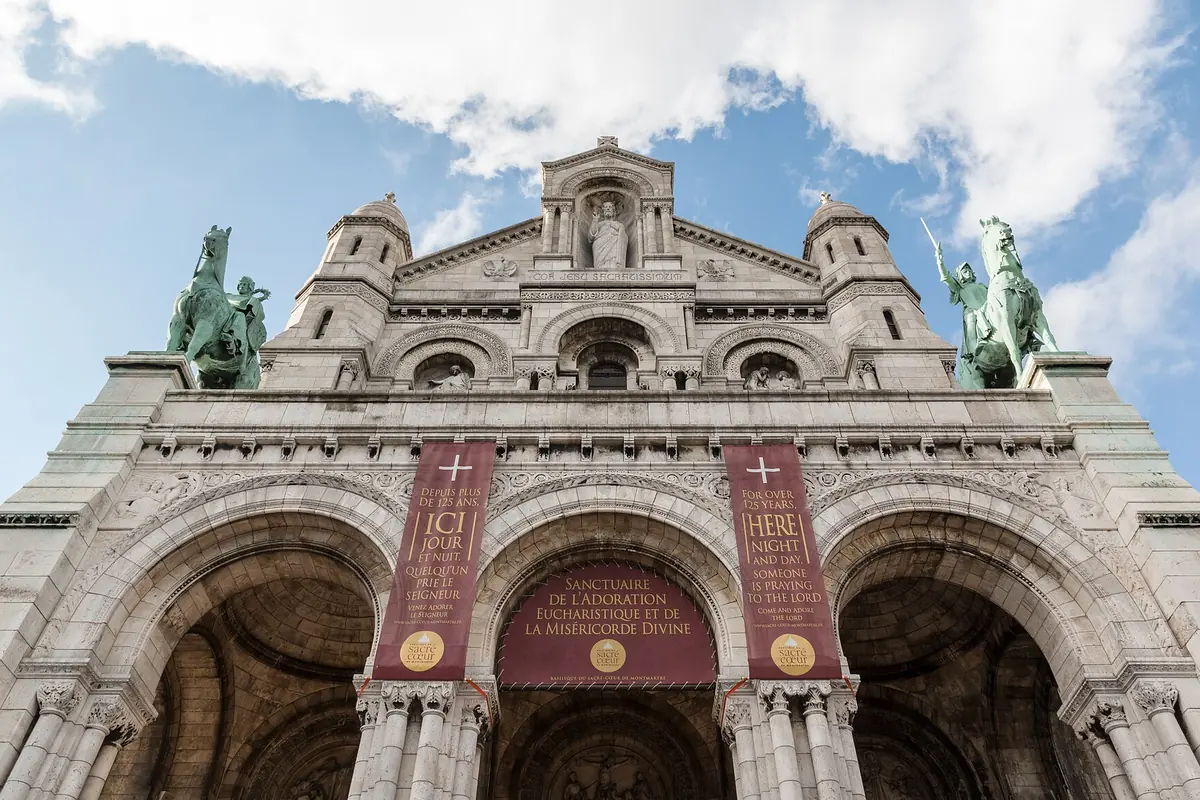
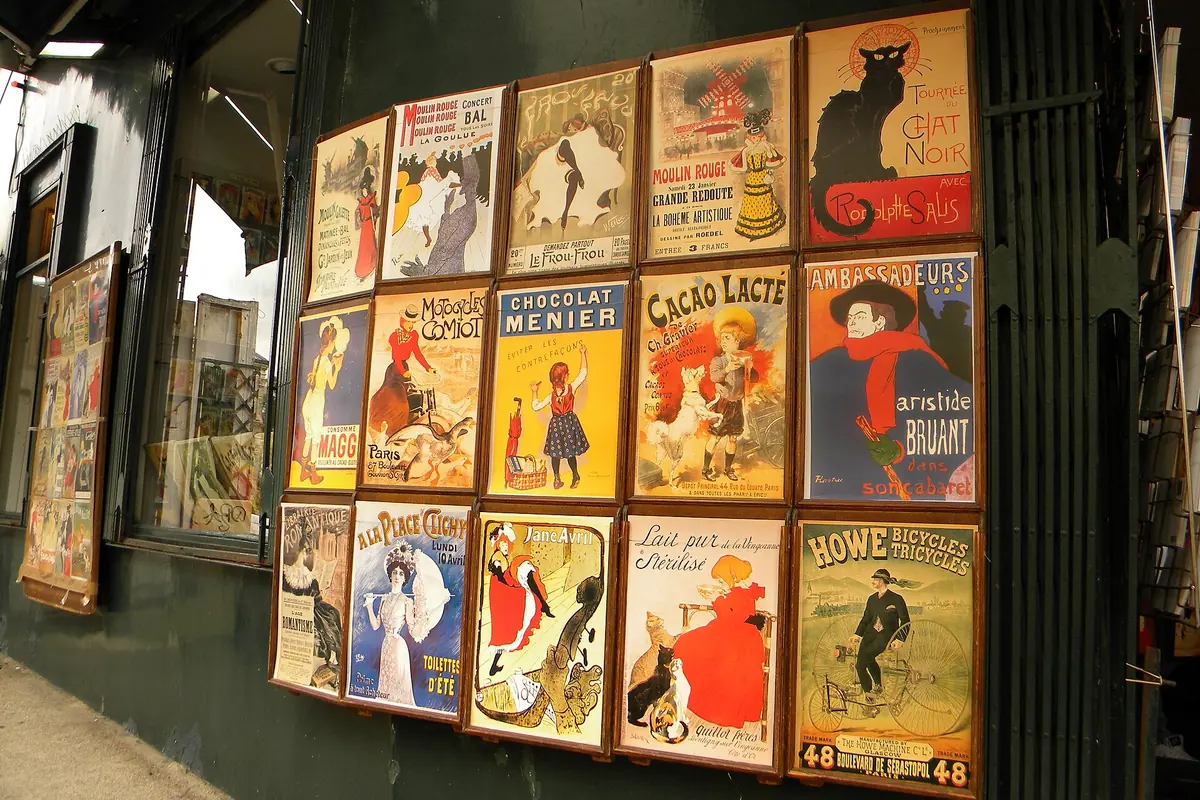
Paintings and posters of the period, early and recent photographs of the building and the streets around it. No picture here comes from the revue, its hall or its performers.
Read these first
Guides to the show, the dress code and the district
- Start here Moulin Rouge show: worth it? Is the Moulin Rouge show worth the price, and should you add dinner? What the Champagne ticket covers, the dress code, the nudity note and who it suits. Open the guide →
- Compare Moulin Rouge: Champagne or dinner The Moulin Rouge show with Champagne or the dinner and show: which ticket should you book? Length, what each includes, notice, dress code and who each suits. Open the guide →
- The history The can-can and the windmill Where the can-can came from, who opened the windmill cabaret in 1889, what Toulouse-Lautrec painted there and what burned in 1915, from public sources. Open the guide →
- The rules Dress code and house rules What to wear to the Montmartre cabaret, what the venue refuses at the door and the house rules on photographs, bags, hats, smoking and late arrival. Open the guide →
- Getting there Getting there: Blanche Métro The closest Métro station to the Montmartre cabaret is Blanche. Where it sits, how it got its name and how to plan the way there and back. Open the guide →
- The district Montmartre and Pigalle, briefly What Montmartre and Pigalle are, how the hill became Paris’s district of artists and cabarets, and what to see around the show. Open the guide →
FAQ
What people ask before booking
Is the Moulin Rouge show worth the price, and should I add dinner?
For a first night in Paris, yes, if you want the spectacle and the setting. The ticket covers entrance, the current revue and half a bottle of Champagne each over about two hours. Add dinner only if you would otherwise book a restaurant that night.
Is dinner included in this ticket?
No. The ticket lists entrance to the cabaret, a ticket to the current revue and half a bottle of Champagne per person, with service and tips included. Dinner and show is a separate, longer listing.
Is the ticket refundable?
No. The ticket is listed as non-refundable on its booking page, and the cabaret’s own FAQ says its tickets cannot be refunded or exchanged. Be sure of your date and group before you pay.
What is the dress code?
Elegant attire is required: no shorts, sportswear or sports shoes. A tie and jacket are not needed. The FAQ also asks men not to wear open shoes and guests to take off hats and caps.
Is there nudity, and can children come?
The cabaret’s FAQ says the revue includes nudity and describes topless passages. It accepts children from six years old with an adult, so think about your group before you book.
Can I choose my seat?
No. There is no fixed seating plan, and the FAQ says staff lead you to your table on arrival. Seats are allocated by the venue.
Will I see the can-can?
Wikipedia says the French cancan has been a staple of the cabaret’s revues since the 1950s. The cabaret keeps the right to change its programme, so no guide can promise a given scene.
How do I get there, and are photographs allowed?
The closest Métro station is Blanche, under Boulevard de Clichy. Transport is not included. The FAQ forbids photographing or filming the hall or the show, so keep your phone away.
Is this the cabaret’s own website?
No. Montmartre Cabaret Guide is an independent site, not run by the cabaret, the company behind the revue, any performer or the ticket seller. A booking made from a link here is handled by GetYourGuide.