The district
Montmartre and Pigalle, briefly
What Montmartre and Pigalle are, how the hill became Paris’s district of artists and cabarets, and what to see around the show.
Reserve your night ↗Quick answer
Montmartre is a hill in northern Paris, 130 metres high, known for artists, the white-domed Sacré-Cœur basilica and its nightclubs. Pigalle lies downhill to the southwest, and the cabaret stands there, near Blanche Métro station. Artists such as Renoir, Toulouse-Lautrec and Picasso lived and worked on the hill around the turn of the twentieth century. A short walk around it makes a good start to the evening.
The hill
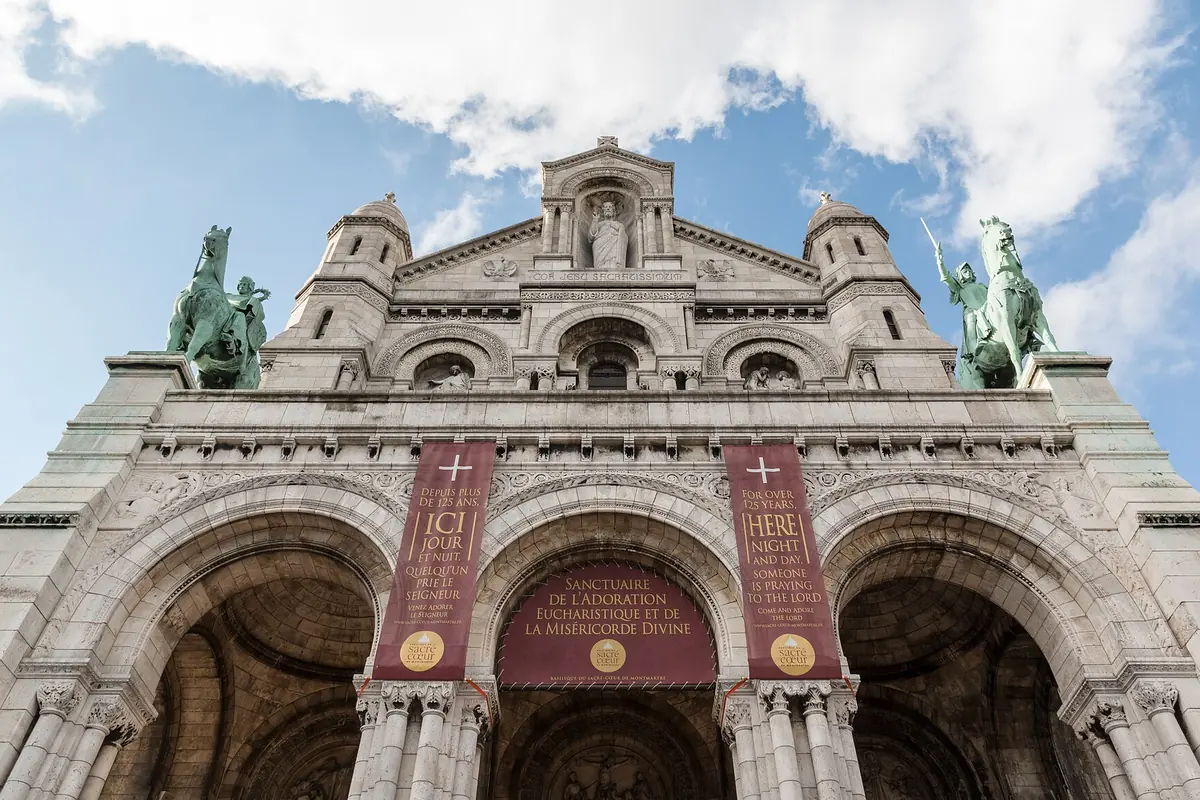
Wikipedia describes Montmartre as a large hill in Paris’s northern 18th arrondissement, 130 metres high, which gives its name to the surrounding district. It is known for its artistic history, for the white-domed Basilica of the Sacré-Cœur on its summit and as a nightclub district. The basilica was built from 1876 to 1919, financed by public subscription.
The artists
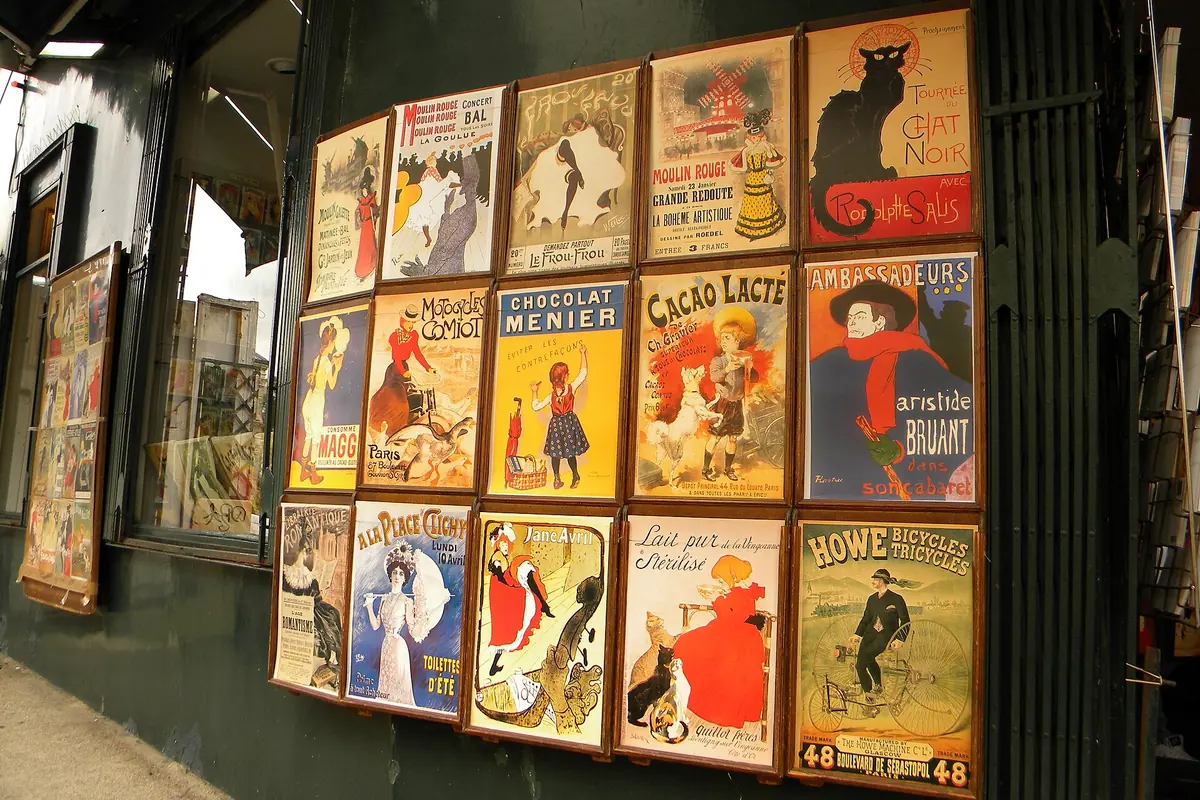
During the Belle Époque, which the article dates from 1872 to 1914, many artists lived or worked on the hill because rents were low. The Montmartre article names Renoir, Degas, Toulouse-Lautrec, Suzanne Valadon, Utrillo, Picasso and Van Gogh among them. Near the basilica, artists still set up their easels among the tables and umbrellas of the Place du Tertre, where visitors have their portraits painted.
The other windmill
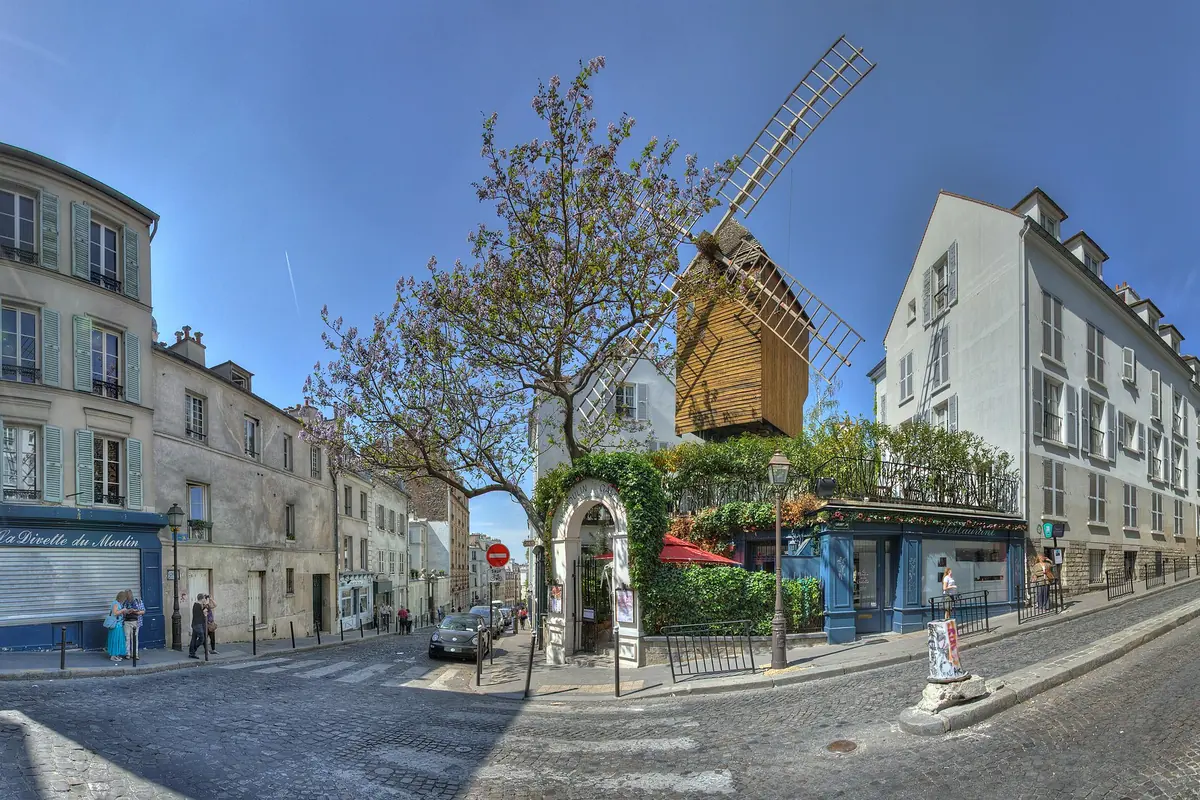
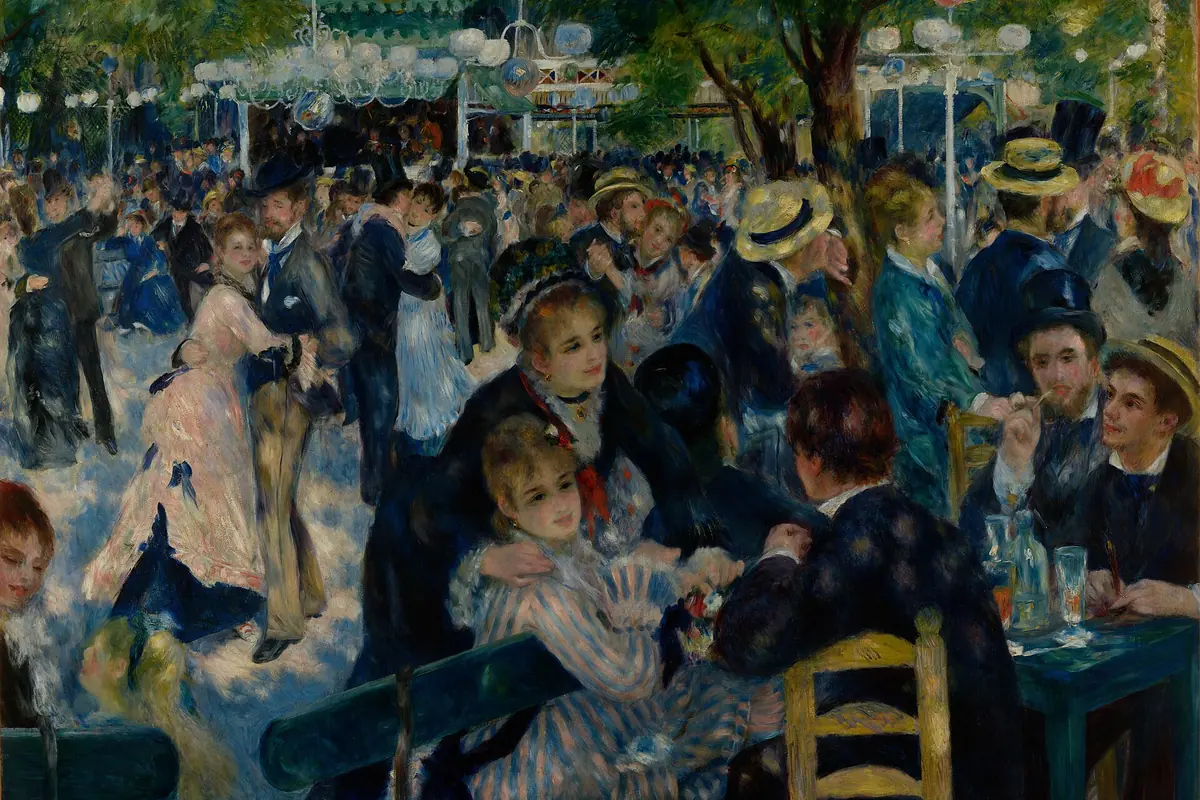
Montmartre once had many windmills that ground grain and gypsum. The Moulin de la Galette, shown here, is one of the survivors, and it is not the cabaret. Renoir painted a Sunday dance there in 1876. Wikipedia lists the Moulin de la Galette among the hill’s sights, so a walk to it is a reasonable use of an early evening.
Cabarets of the hill
By the nineteenth century the hill was famous for its cafés, its guinguettes with public dancing and its cabarets. Wikipedia names Le Chat Noir, founded in 1881 and a haunt of writers and poets, and the cabaret of this guide, founded in 1889. The Lapin Agile, where artists gathered, is still there. The boulevard de Rochechouart keeps concert halls inspired by the old cabarets.
Pigalle, downhill
Downhill to the southwest is Pigalle, which Wikipedia describes as a red-light district. It says the area is today largely known for shops that sell rock-music instruments and for concert halls, and it places the cabaret there, near Blanche station.
Making an evening of it
The show is about two hours, so there is time for a walk on either side of it. A common plan is the hill in the late afternoon and a meal before or after the revue. Wear shoes that suit both the cobbles and the dress code, since the hill is steep and the cabaret refuses sports shoes. If you want dinner in the same booking, the dinner version is the alternative.
Sources